
An Exegetical Walkthrough of Acts 15:1–21
Few chapters in the New Testament have had a greater influence on Christian theology than Acts 15. The Jerusalem Council is often cited in discussions about salvation, circumcision, the Law of Moses, and the relationship between Jewish and Gentile believers. Yet before we ask what the council’s decision means for us today, we should first ask a simpler question:
What question was the council actually trying to answer?
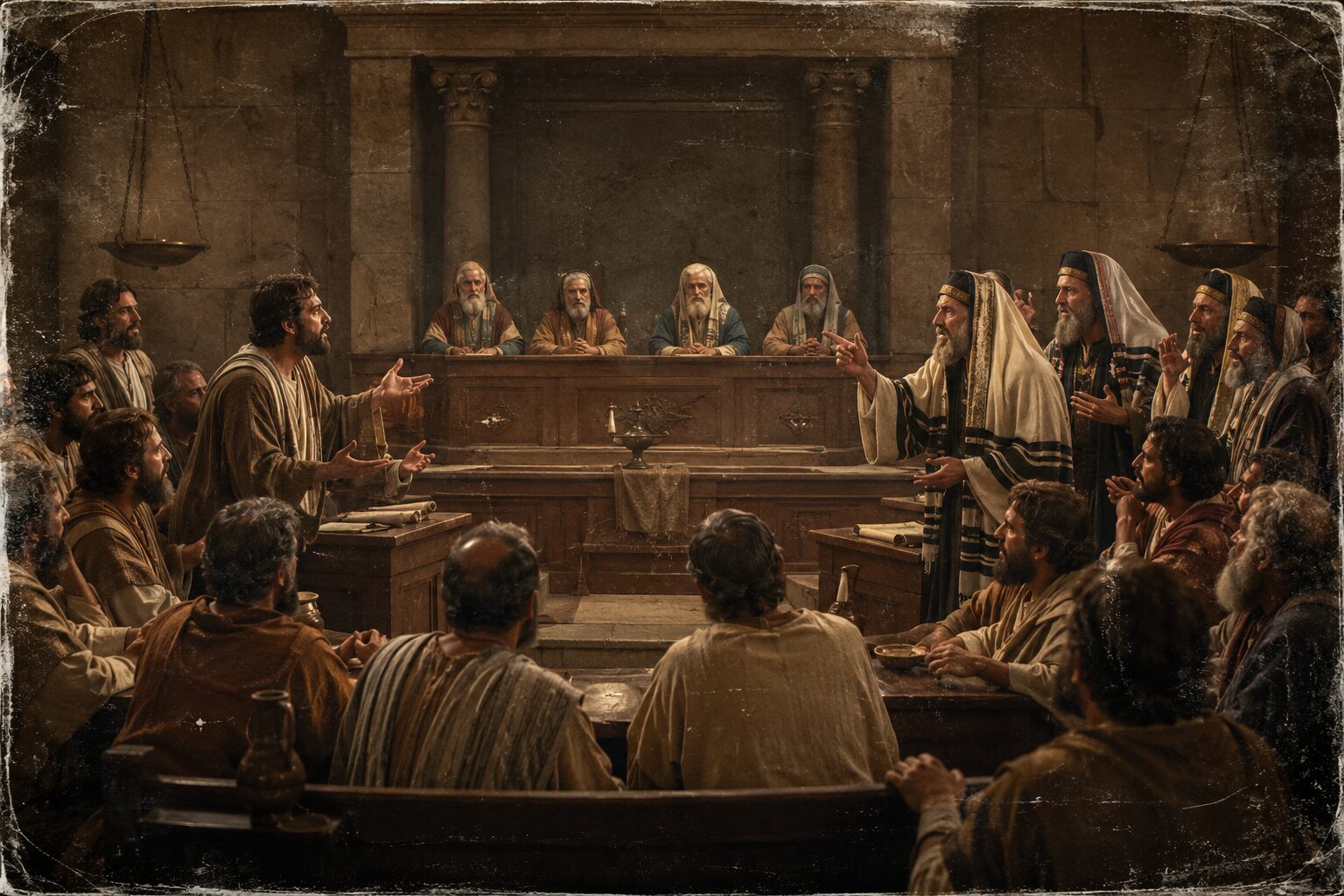
Luke invites us into the council chambers to listen as the debate unfolds. We hear the arguments, the testimony of witnesses, and the appeal to the Hebrew Scriptures before James finally announces the council’s judgment. Rather than beginning with the conclusion, we’ll follow Luke’s argument step by step and ask what this discussion would have meant to those who were actually present.
One challenge for modern readers is that we often approach Acts 15 with different questions than the apostles did. Today, discussions about the Law of Moses frequently begin by asking whether anyone should keep the Torah. But nearly twenty years after Jesus’ resurrection and ascension, that is not the question before the council. The apostles, the elders, and even the believing Pharisees all assume the continuing authority of the Scriptures of Israel. The debate is whether Gentile believers must become Jews through circumcision and covenant conversion in order to belong to God’s covenant people.1 Recognizing that distinction is the key to understanding everything that follows.
The Case Is Presented
Some men came down from Judea and began teaching the brothers, “Unless you are circumcised according to the custom of Moses, you cannot be saved.” 2 And after Paul and Barnabas had a heated argument and debate with them, the brothers determined that Paul and Barnabas and some others of them should go up to Jerusalem to the apostles and elders concerning this issue. 3 Therefore, after being sent on their way by the church, they were passing through both Phoenicia and Samaria, describing in detail the conversion of the Gentiles, and they were bringing great joy to all the brothers and sisters. 4 When they arrived in Jerusalem, they were received by the church, the apostles, and the elders, and they reported all that God had done with them. 5 But some of the sect of the Pharisees who had believed stood up, saying, “It is necessary to circumcise them and to direct them to keep the Law of Moses.” (Acts 15:1-5 NASB)
Luke begins by presenting the issue. Some men from Judea arrive in Antioch teaching, “Unless you are circumcised according to the custom of Moses, you cannot be saved.” This controversy lies behind much of Paul’s ministry and many of his letters.2 The question is not whether Gentiles can believe in Jesus—they already have. The question is how Gentiles become full members of God’s covenant people. Must they become Jews through circumcision and covenant conversion, or has God opened another way?
From a first-century Jewish perspective, the concern was understandable. God gave circumcision to Abraham as the sign of His covenant (Genesis 17), and Gentiles who wished to join Israel traditionally entered through circumcision and covenant conversion. Circumcision therefore represented more than a single commandment; it marked entry into Israel’s covenant community and the obligations of life under the Mosaic covenant. This explains why the believing Pharisees insist not only on circumcision but also that Gentile believers be instructed “to keep the Law of Moses” (v. 5). But what few had anticipated was that God would welcome uncircumcised Gentiles first. Paul later described this as part of the “mystery” now revealed in Messiah—that Gentiles are “fellow heirs and fellow members of the body” (Eph. 3:6).
This discussion can feel foreign to modern readers because we often begin with a different question: Should anyone keep the Torah? That is not the question before the council. Nearly twenty years after Jesus’ resurrection, the apostles, the elders, and even the believing Pharisees all assume the continuing authority of Israel’s Scriptures. The debate is whether Gentile believers must become Jews in order to belong to God’s covenant people.
Everything that follows in Acts 15 seeks to answer that question.
The First Witness: Peter
6 The apostles and the elders came together to look into this matter. 7 After there had been much debate, Peter stood up and said to them, “Brothers, you know that in the early days God made a choice among you, that by my mouth the Gentiles would hear the word of the gospel and believe. 8 And God, who knows the heart, testified to them giving them the Holy Spirit, just as He also did to us; 9 and He made no distinction between us and them, cleansing their hearts by faith. 10 Since this is the case, why are you putting God to the test by placing upon the neck of the disciples a yoke which neither our forefathers nor we have been able to bear? 11 But we believe that we are saved through the grace of the Lord Jesus, in the same way as they also are.” (Acts 15:6-11 NASB)
After much debate, Peter reminds the council of what happened when God sent him to Cornelius (Acts 10). God gave the Holy Spirit to uncircumcised Gentiles who believed the gospel, just as He had given the Spirit to the Jewish believers (Acts 2). Peter’s argument is simple: God accepted the Gentiles before they were circumcised. If God had already welcomed them, why should the council require something God Himself had not?
Peter concludes that God “made no distinction” between Jewish and Gentile believers, cleansing both by faith. His point is not that Jews and Gentiles cease to exist as distinct peoples, but that both receive God’s grace on the same basis. To require circumcision as a condition for entering God’s people would be, in Peter’s words, “putting God to the test.”
Peter ends by directly answering the claim that began the chapter. Some had argued, “Unless you are circumcised… you cannot be saved.” Peter responds that salvation comes “through the grace of the Lord Jesus” (v.11), not through circumcision.
The Confirming Witnesses: Paul and Barnabas (Acts 15:12)
12 All the people kept silent, and they were listening to Barnabas and Paul as they were relating all the signs and wonders that God had done through them among the Gentiles
After Peter finishes, the entire assembly falls silent. Rather than continuing the debate, they listen as Paul and Barnabas recount “the signs and wonders God had done through them among the Gentiles.”
Peter testified that God accepted uncircumcised Gentiles by giving them the Holy Spirit. Paul and Barnabas now confirm that this was not an isolated event. Throughout their missionary journeys, God repeatedly worked among the nations, validating their ministry with signs and wonders. Paul & Barnabas emphasized what God had done through his Spirit.
The Judge Appeals to the Scriptures
13 After they stopped speaking, James responded, saying, “Brothers, listen to me. 14 Simeon has described how God first concerned Himself about taking a people for His name from among the Gentiles. 15 The words of the Prophets agree with this, just as it is written:
16 ‘After these things I will return,
And I will rebuild the fallen tabernacle of David,
And I will rebuild its ruins,
And I will restore it,
17 So that the rest of mankind may seek the Lord,
And all the Gentiles who are called by My name,’
18 Says the Lord, who makes these things known from long ago. (Acts 15:13-18 NASB)
When Paul and Barnabas finish speaking, James—the leader of the Jerusalem assembly—addresses the council. James first summarizes Peter’s testimony: God has visited the Gentiles and is calling from among them “a people for His name.”, and then turns to the Hebrew scriptures.
Quoting Amos 9:11–12, James argues that this should not surprise anyone. The prophets had long foretold that when God restored the fallen house of David, the nations would seek the Lord and be gathered to Him.3 In other words, the inclusion of the Gentiles is not a departure from God’s plan; it is evidence that His promises are being fulfilled. Israel’s Messiah has come, the restoration has begun, and now the nations are turning to the God of Israel just as the prophets anticipated.
The arguments are clear but how should the assembly of believers respond?
The Verdict of the Council
19 Therefore, it is my judgment that we do not cause trouble for those from the Gentiles who are turning to God, 20 but that we write to them that they abstain from things contaminated by idols, from acts of sexual immorality, from what has been strangled, and from blood. 21 For from ancient generations Moses has those who preach him in every city, since he is read in the synagogues every Sabbath.” (Acts 15:19-21 NASB)
After hearing the testimony of Peter, Paul, and Barnabas, and after showing that their experiences agree with the words of the prophets, James finally renders the council’s judgment.
His conclusion begins with a simple statement: “Therefore it is my judgment that we do not trouble those who are turning to God from among the Gentiles.” The central question before the council has now been answered. Gentiles do not need to become Jews through circumcision in order to enter God’s covenant people. God has already welcomed them by faith, and the apostles refuse to place an additional requirement where God has not.
James does not, however, send the Gentile believers away without instruction. Instead, he asks them to abstain from four practices: things polluted by idols, sexual immorality, meat from strangled animals, and blood. These four instructions have been interpreted in several ways, but many scholars have noted their close correspondence to the commands given to the ger (“resident foreigner”) in Leviticus 17–18.4
| Acts 15 | Leviticus |
|---|---|
| Things polluted by idols | Leviticus 17 (proper worship/sacrifices) |
| Blood | Leviticus 17:10–14 |
| Things strangled | Leviticus 17 (animals properly drained of blood) |
| Sexual immorality | Leviticus 18 |
If James had these chapters in mind, he is not inventing new commandments for Gentile believers. Instead, he is drawing from the Torah’s own instructions for how non-Israelites were to live among God’s people. This would also explain why he immediately reminds the council that “Moses is read in the synagogues every Sabbath” (v. 21). Rather than dismissing the Torah, James grounds his judgment in it while distinguishing between the covenant obligations of Jews and those required of Gentile believers.
The council rejects both extremes before it. Gentiles are not required to become Jews in order to belong to God’s covenant people, yet neither is the Torah treated as irrelevant. Instead, James grounds his judgment in the Scriptures, welcoming Gentiles by grace while calling them to lives shaped by God’s instruction.
Why the Jerusalem Council Matters
The Jerusalem Council answered a question that shaped the future of the early believers: Must Gentiles become Jews to belong to God’s covenant people? The apostles concluded that they did not. God had already welcomed believing Gentiles by His grace, and the prophets had foretold that the nations would seek the God of Israel during the restoration of David’s kingdom.5
Acts 15 does not present the Torah as irrelevant, nor does it require Gentiles to become Jews or suggest that Jewish believers should stop living as Jews. Instead, it reveals a body of believers united in the Messiah, where Jews and Gentiles share in God’s covenant promises while the Scriptures continue to guide God’s people.
Like the apostles, we should allow Scripture to shape our understanding of God’s work rather than bringing our assumptions to the text. When we do, Acts 15 becomes a powerful testimony to God’s faithfulness in welcoming the nations into His covenant family through Israel’s Messiah.
- The central issue as whether Gentiles could be welcomed as Gentiles without physical circumcision rather than whether the Torah itself should be abandoned. Keener, Craig S. Acts: An Exegetical Commentary. Vol. 3. Grand Rapids: Baker Academic, 2014. ↩︎
- Matthew Thiessen describes this issue as “the Gentile problem”—the question of how Gentiles could share in Israel’s promises without becoming Jews. See Matthew Thiessen, A Jewish Paul (Grand Rapids: Baker Academic, 2023), esp. chaps. 5–7. ↩︎
- Readers may notice that James’ quotation differs slightly from many English translations of Amos 9:11–12. This is because Acts quotes the Septuagint (LXX), the ancient Greek translation of the Hebrew Scriptures that was widely used by Greek-speaking Jews in the first century. The Septuagint reads “the rest of mankind” where the traditional Hebrew Masoretic Text reads “Edom.” Despite this difference, both texts communicate the same central idea: following the restoration of David’s kingdom, the nations would come to seek the God of Israel. Luke’s point is not to debate the wording of Amos but to show that the inclusion of the Gentiles fulfills Israel’s prophetic hope rather than contradicting it. ↩︎
- Many scholars see Leviticus 17–18 as the primary background for James’s four prohibitions, noting their correspondence to the commands given to the ger (“resident foreigner”) living among Israel. See Craig S. Keener, Acts: An Exegetical Commentary, vol. 3 (Grand Rapids: Baker Academic, 2014), commentary on Acts 15:20–21; David J. Rudolph, “Acts 15 and the Jerusalem Council Decision,” in Introduction to Messianic Judaism: Its Ecclesial Context and Biblical Foundations, ed. David J. Rudolph and Joel Willitts (Grand Rapids: Zondervan, 2013). ↩︎
- Wright describes the Jerusalem Council as a defining moment in which the early church recognized that God’s covenant promises to Israel were now embracing the nations through Israel’s Messiah without requiring Gentile conversion to Judaism. See N. T. Wright, Acts for Everyone, Part 2, 36–46. ↩︎
Bibliography:
- Keener, Craig S. Acts: An Exegetical Commentary. Vol. 3. Grand Rapids: Baker Academic, 2014.
- Rudolph, David J. “Acts 15 and the Jerusalem Council Decision.” In Introduction to Messianic Judaism: Its Ecclesial Context and Biblical Foundations, edited by David J. Rudolph and Joel Willitts, 167–181. Grand Rapids: Zondervan, 2013.
- Thiessen, Matthew. A Jewish Paul: The Messiah’s Herald to the Gentiles. Grand Rapids: Baker Academic, 2023.
- Wright, N. T. Acts for Everyone, Part 2: Chapters 13–28. Louisville: Westminster John Knox Press, 2008.
Leave a Reply
You must be logged in to post a comment.