
The Forgotten Bridge: Why 1 Maccabees Matters for Followers of Jesus
If you’ve ever read your Bible straight through, you may have felt the silence between Malachi and Matthew. The story seems to pause, only to suddenly reopen in a world filled with Roman rule, Temple activity, and deep expectation for a coming Messiah. But that world didn’t appear overnight. It was shaped through real history, real suffering, and real faithfulness.
One of the most important sources for understanding that missing piece is the book of 1 Maccabees. Though it is often unfamiliar to many believers today, it serves as a vital bridge that helps us understand the context of both the world Jesus entered and the meaning of His mission within Israel’s ongoing story.
1 Maccabees captures a crucial period of Jewish history during the 2nd temple period that directly shapes the world we encounter in the Gospels. Though preserved in Greek, early testimony indicates it was originally written in Hebrew, and its style mirrors the historical narratives of Joshua and Kings, emphasizing God’s ongoing work in Israel’s story. While it was not ultimately preserved within the Jewish canon, it was highly valued in early Christian communities and included in the major Septuagint manuscripts Codex Sinaiticus (330–360 CE) and Codex Alexandrinus (400–440 CE) showing it was valued by the Greek-speaking church, and is commonly included in the medieval LXX copies. Today, although often placed in the Apocrypha within Protestant traditions, 1 Maccabees continues to offer vital insight into the faith, struggles, and expectations of the God’s people in the generations leading up to the time of Jesus.
What is it About?
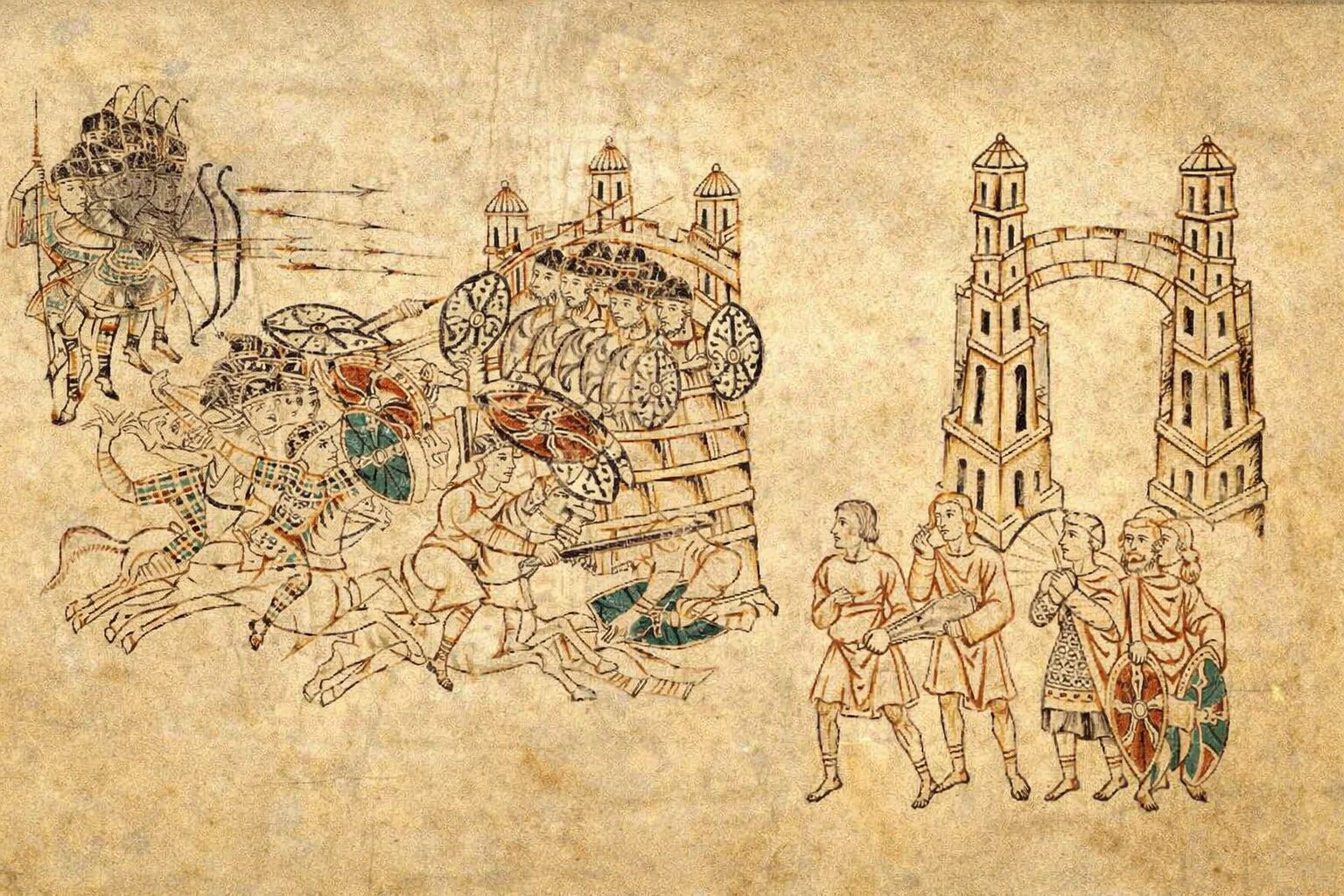
At its core, 1 Maccabees tells the story of what happens when faithfulness to God is tested under pressure. After the empire of Alexander the Great fractured, Judea eventually came under Seleucid rule. For a time, life remained stable. But everything changed under Antiochus IV, who sought to erase Jewish identity by outlawing key commandments—Sabbath observance, circumcision, and sacrifices—and by desecrating the Temple itself. This was more than just mere political oppression, but was an attempt to sever Israel from her covenant with God.
In response, a priestly family rose up. Mattathias and his sons, especially Judas Maccabeus, refused to compromise. They led a revolt not just for national freedom, but for the right to remain faithful to God. They fought to restore proper worship, cleanse the Temple, and reestablish covenant life. Their victory and the rededication of the Temple became what we now know as Hanukkah.
The book continues to describe the leadership of Judea by the sons of Mattathias as they navigated the civil war within the Seleucid empire around them. Eventually this resulted in the establishment of the Hasmonaean dynasty, where the Jewish people had their own independent kingdom for the first time since the destruction of the 1st temple, and for the last time until the modern state of Israel was established in 1948.
Why Does the Book Matter?
When we read 1 Maccabees, we begin to understand the world Jesus stepped into. The people of His day were shaped by recent generations of struggle and faithfulness, so many expected a Messiah like Judas Maccabeus—a deliverer who would overthrow oppression and restore Israel. Yet Jesus revealed a kingdom that did not come by the sword, but still fulfilled God’s promises in a deeper way.
This book also helps us see why the Temple was so central in the Gospels. It was not only the place of God’s presence, but a symbol of hard-won faithfulness—defiled, fought for, and restored. When Jesus taught and acted within the Temple, He was engaging a story full of meaning and expectation.
Even the existence of different Jewish groups in the Gospels, such as the Pharisees, Sadducees, Essenes, and Zealots are tied to this period. These groups emerged in response to the challenges of maintaining Torah observance under foreign rule and internal conflict, and the controversial Priesthood and Kingship of the Maccabean and Hasmonean rulers.
The people in 1 Maccabees were willing to suffer, and even die, rather than abandon God’s commandments. Their faithfulness challenges us to consider our own. Jesus echoes this same call when He says, “If anyone would come after me, let him deny himself and take up his cross” (Matthew 16:24).
Too often, we treat the time between the Old and New Testaments as empty, as if God was silent. But 1 Maccabees reminds us that He was not absent. He was preserving His people, sustaining their faith, and preparing the world for the coming of the Messiah. And while the book might not be in most modern protestant bibles, many will still agree that it is still useful for the “the edification of the people, [but] not to establish the authority of ecclesiastical doctrines” (Jerome, Prologus Galeatus (Preface to Samuel and Kings).
Read the book yourself on YouVersion
This is a high-level overview—if you’d like to go deeper, check out my academic 1 Maccabees reading report.
Much of this content and original text were derived from the following translation and notes: Michael D. Coogan et al., eds., The New Oxford Annotated Bible with the Apocrypha: New Revised Standard Version, 5th ed. (New York: Oxford University Press, 2018), 205-248.
Leave a Reply
You must be logged in to post a comment.