
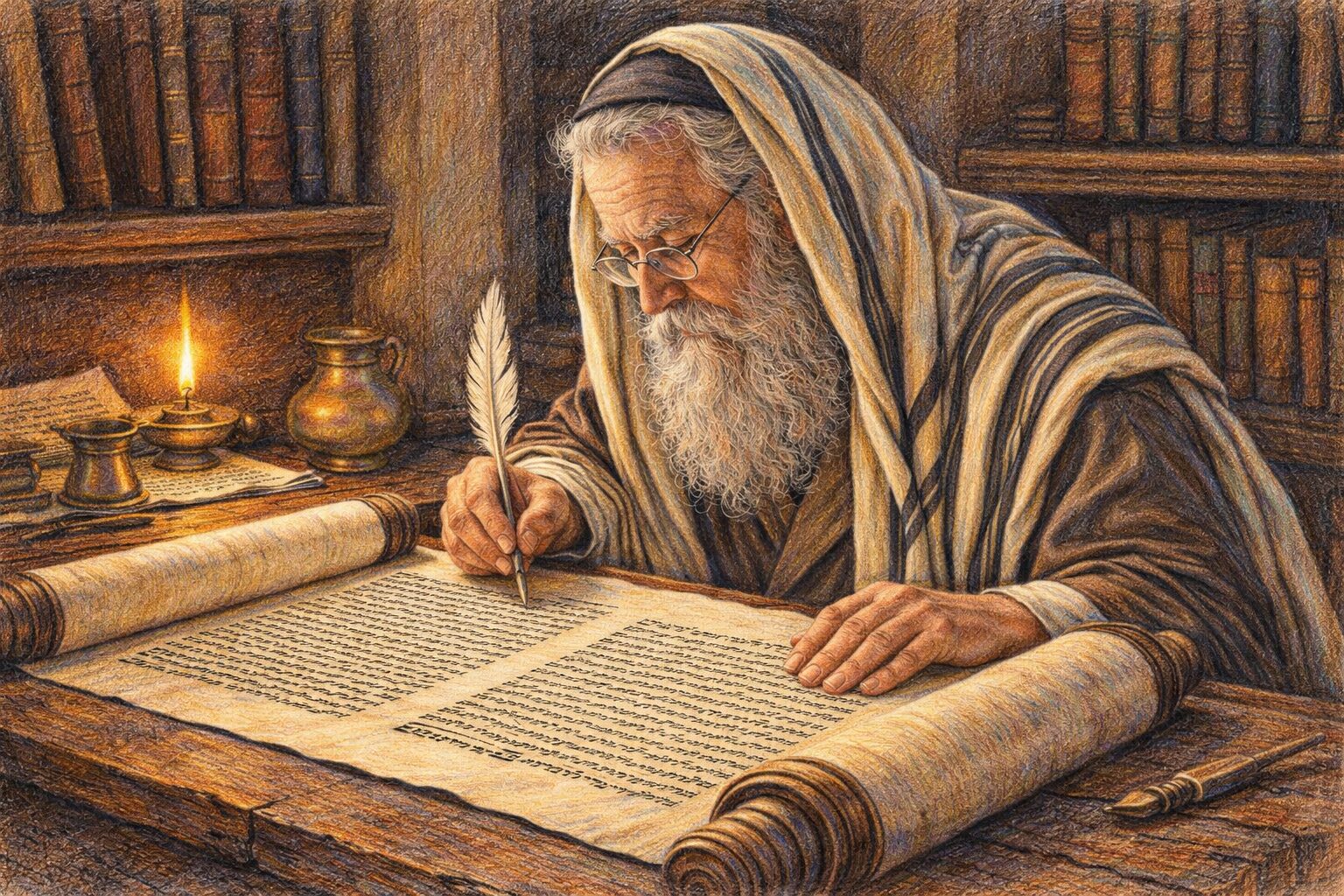
How the Bible Was Formed — And Why It Can Be Trusted
Many people assume the Bible simply appeared as a finished book. In reality, it is a collection of writings produced over many centuries and gradually recognized as Scripture by the communities that preserved them.
Understanding how the Bible was formed helps explain both where these writings came from and why many people trust that the text we have today faithfully reflects the earliest writings.
The Bible Is a Library
The word Bible comes from a Greek term meaning “books.” That description is accurate. The Bible is not a single document but a library of writings produced over roughly 1,000–1,500 years by roughly 35–40 authors.
These writings include:
Historical narratives, Poetry and wisdom literature, Prophetic writings, Letters, Biographical accounts of Jesus
Although written in different periods and places, these texts were preserved and copied by communities that believed they carried enduring authority.
The Hebrew Scriptures: The Tanakh
What Christians often call the Old Testament is known in Judaism as the Tanakh. The name comes from the three traditional divisions of the Hebrew Scriptures:
- Torah – the Law
- Nevi’im – the Prophets
- Ketuvim – the Writings
These contain the same books found in most Protestant Old Testaments, though the order is arranged differently. Instead of grouping books mainly by literary type or chronology, the Jewish structure organizes them within these three categories.
By the time of Jesus in the first century, these writings were already widely recognized and read regularly in synagogues. The Torah, Prophets, and Writings formed the scriptural foundation of Jewish life and teaching.
The New Testament Writings
The New Testament documents were written in the first century AD by the earliest followers of Jesus. Nearly all of the authors were Jewish, shaped by the language, Scriptures, and worldview of Israel (with the exception of Luke).
Because of this, the New Testament constantly references the Hebrew Scriptures. The writers present Jesus and his message within the ongoing story of Israel.
These writings include: The four Gospels, Acts, Letters from early Jesus movement leaders, and The apocalypse of John.
They circulated among early communities and were copied, shared, and read publicly.
Inspiration and the Formation of Scripture
The biblical writings themselves describe Scripture as originating through divine inspiration. “All Scripture is God-breathed and useful for teaching, rebuking, correcting and training in righteousness.” — 2 Timothy 3:16
Early believers understood the writings about Jesus and the apostles as continuing this inspired witness of the Hebrew scriptures. In the same way, many believers understand the recognition of these books as Scripture to have been guided by the work of the Spirit within the early Christian community as they discerned which writings faithfully reflected the apostolic message.
Why the Canon Was Clarified
In the second century, debates arose about which writings accurately represented the teachings about Jesus. One influential figure was Marcion, who rejected the Hebrew Scriptures and argued that Christianity should separate itself entirely from its Jewish roots. He produced his own edited collection of Christian writings that removed references connecting Jesus to Israel’s Scriptures.
This controversy pushed early believing communities to more clearly identify the writings they already recognized as authoritative. By the fourth century, the list of New Testament books matched the 27 books used today.
A Brief Timeline of the Bible’s Formation
1400–400 BC – Most writings of the Hebrew Scriptures are composed
1st century AD – New Testament books written and circulated
140 AD – Marcion controversy prompts discussion of authoritative texts
300s AD – Christian leaders begin publishing formal lists of recognized books
367 AD – A list identical to the modern 27-book New Testament appears in writing (Athanasius’ Letter)
Manuscripts and the Reliability of the Text
One reason historians take the Bible seriously as an ancient document is the sheer number of surviving manuscripts. For the New Testament alone there are:
- Over 5,800 Greek manuscripts
- More than 10,000 Latin manuscripts
- Thousands of additional copies in languages like Syriac, Coptic, and others
In total, there are over 20,000 surviving manuscripts of the New Testament.
To put that in perspective, the next most well-preserved ancient work is usually considered to be Homer’s Iliad, with roughly 1,800 surviving manuscripts—far fewer than the New Testament.
Because scholars have so many copies to compare, they can identify small copying differences and reconstruct the earliest wording with remarkable confidence. Most textual variations involve spelling, word order, or minor phrasing differences that do not change the overall meaning of the passage.
Many textual scholars estimate that the New Testament text is about 99% textually certain, meaning the wording of the vast majority of the text is widely agreed upon.
The Dead Sea Scrolls and the Hebrew Scriptures
Discoveries like the Dead Sea Scrolls, found beginning in 1947, have also helped confirm the stability of the biblical text. These scrolls include copies of many Hebrew Scriptures dating as far back as the third century BC, more than a thousand years earlier than some previously known manuscripts.
When these ancient scrolls were compared to later copies of the Hebrew Bible, scholars found that the modern texts based on the Masoretic tradition (manuscripts around 900-1000CE) matched roughly 95% of what was found in the dead sea scrolls with the remaining 5% consisting mostly of spelling variations, minor grammatical differences, or scribal slips, demonstrating how carefully the Scriptures had been preserved over multiple centuries!
The Big Picture
The Bible did not appear suddenly as a finished book. Instead, it developed over time as communities preserved writings they believed faithfully communicated God’s work and message.
The Hebrew Scriptures were recognized within Jewish communities, and the New Testament writings emerged from the earliest followers of Jesus within that same Jewish world and inspired by the Spirit of God.
Through centuries of copying, discussion, and careful preservation, these writings were passed down to later generations.
For many readers today, the historical evidence—combined with the long tradition of faithful transmission—provides strong reason to believe that the Bible we read now reflects the same message that was written and shared in the earliest centuries.
It is a miracle that God has preserved his word faithfully for us today. And it is a privilege to live in an age where the bible is so accessible. It is in our language, in our hands, on our phones. We have multiple free study tools like Translations, Illustrations, Logos, Blue Letter Bible, Books and Commentaries, and our local believing communities that help us understand the message of the bible and apply it to our lives. So what are you going to do with this miracle you have in your hands? I urge you to talk a look at it’s pages, I promise it will change your life if you let it.
Leave a Reply
You must be logged in to post a comment.