
Choosing a Bible Translation: Why It Matters Less Than You Think
f you’ve spent any time looking for a Bible, you’ve probably noticed there are a lot of English translations—NIV, NASB, ESV, NLT, NET, KJV, and more. For many people this raises an immediate question: Which one is the right one?
The encouraging answer is that there isn’t just one “correct” English translation. Different translations exist because translating ancient languages into modern English requires making thoughtful choices. Each translation tries to communicate the same underlying text, but with slightly different priorities.
The most important thing is simple: read a Bible.
Why There Are Multiple Translations
The Bible was originally written in Hebrew, Aramaic, and Greek, not English. Because languages don’t map perfectly onto each other, translators must decide how best to express the meaning of the original text.
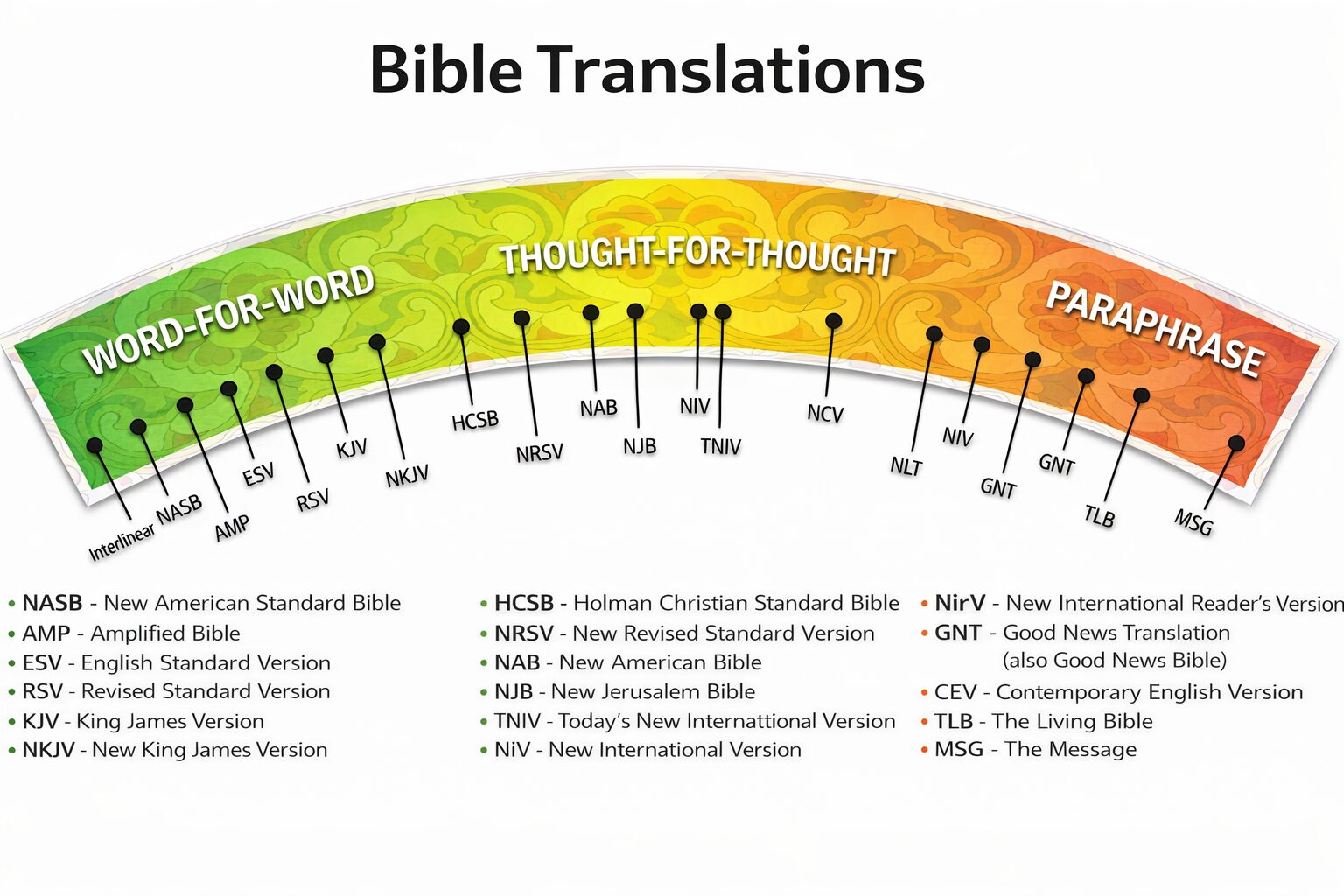
Most translations fall somewhere along a spectrum between two approaches:
More Literal Translations try to stay as close as possible to the wording and structure of the original languages. These can be very helpful for study but sometimes feel more rigid in English and harder to read.
More Readable Translations focus on expressing the interpreted meaning of the passage in natural modern English. These are often easier to read and memorize but as a reader you are subjected to the interpretative lens of the translators.
Modern Bible translations are produced by teams of scholars who specialize in the original languages and ancient history. Rather than working from a single manuscript, they compare thousands of ancient copies of the biblical texts to determine the most reliable wording.
Translations are also done by committees, not individuals. Scholars review one another’s work, discuss difficult passages, and refine the wording together. The result is that modern translations reflect a large amount of careful scholarship.
It is important to note that each Translation is an Interpretation to some degree, even for the most literal translations. Just like modern translating, each language does not map seamlessly on another and so translators have to make interpretive move to reconcile the message communicated with a new language (English). This is usually not a difficulty for general reading, but is important to keep in mind if studying the scripture seriously as each translation committee may have their own perspective and target for their translation that the student needs to be aware of.
Translations I Personally Use
Different translations are helpful in different situations. Here are the ones I tend to use most often:
NIV — For Reading and Memorizing
The New International Version balances clarity and accuracy well. The English reads naturally, which makes it great for daily reading and memorizing passages. This is my go to for daily use and the bible I carry around with me all the time.
NASB — For Study
The New American Standard Bible stays very close to the structure of the original languages. Because of that, it’s particularly useful when studying a passage closely. One thing I love about this translation is it’s use of Italics when translators add a word that isn’t in the text to make it more readable, This helps the reader truly see and understand when translators are adding or changing the text to make it more readable.
NET — For the Notes
The NET Bible includes thousands of detailed translation notes explaining why certain wording decisions were made. Those notes provide a helpful window from the translators into the translation process itself. The translations with the full notes are available for free online: https://netbible.org/bible
NRSV (JANT) — For Cultural and Historical Context
The Jewish Annotated New Testament is the NRSV new testament text with annotations and essays from modern Jewish scholars that place the teachings of the New Testament in their original Jewish cultural and historical context. Many notes challenge common replacement theology biblical interpretations.
Additional Study Tools
We are lucky to line in an age where we have a reliable bible and so many tools available to us in addition to all of the amazing translations that exist today. Tools like Logos, Blue Letter Bible, widespread books and commentaries, all can help us in our study of scripture but cannot replace the text itself.
The Big Picture
Every translation involves trade-offs between precision, readability, and clarity. That’s why having multiple translations can actually be helpful, and that is why I use multiple translations each for a different purpose as they were each created for a different purpose. And when studying, always employ more than one translation, author and bible teacher Orpheus J. Heyward wisely once said: “If you read one translation, you’re reading an interpretation. If you read three, you’re reading the text.”
But in the end, the most important factor isn’t choosing the “perfect” translation.
Leave a Reply
You must be logged in to post a comment.