
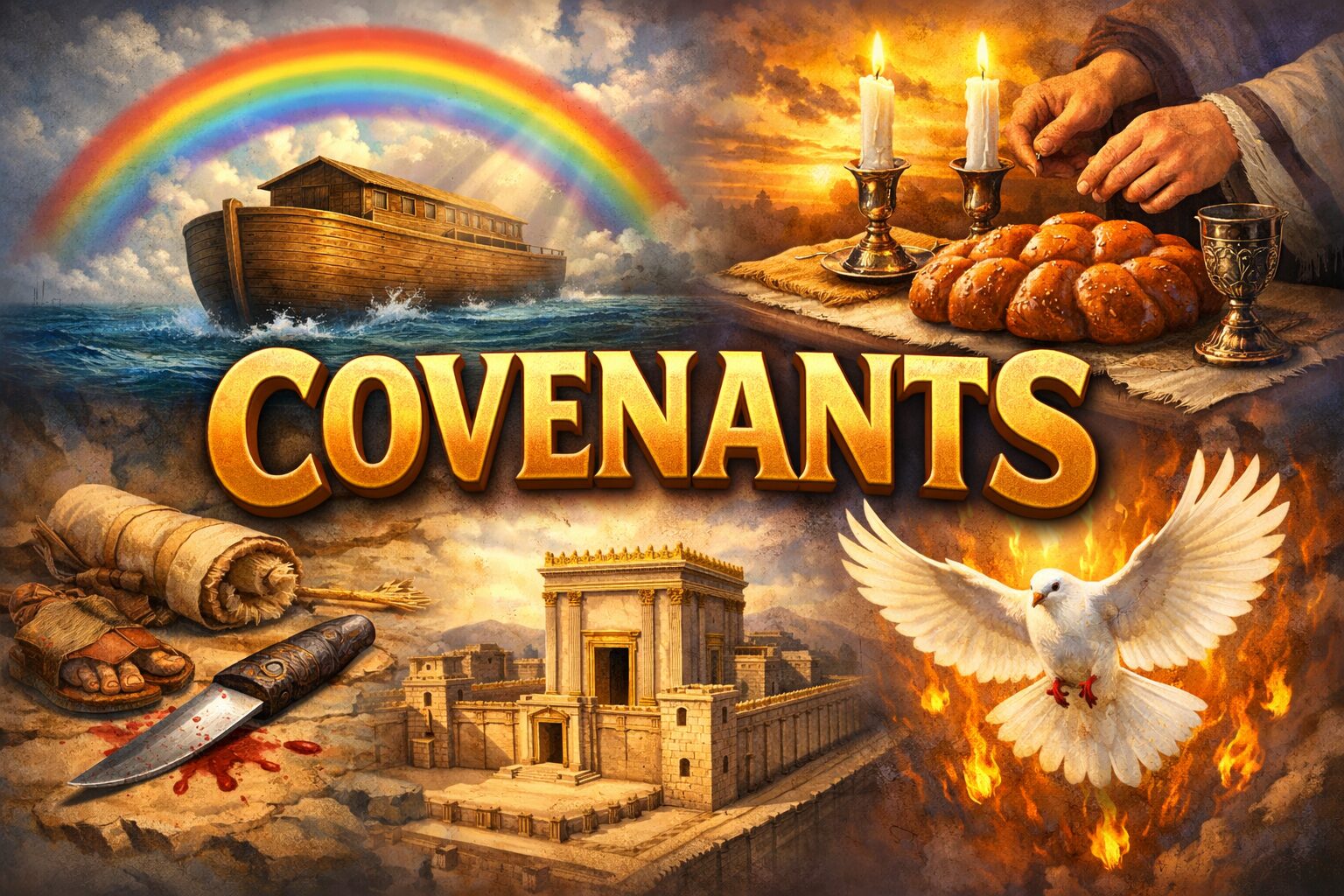
What Is a Covenant? Why the Bible’s Most Important Idea Is Often Misunderstood
When people read the Bible, they often notice promises, commands, blessings, and warnings, but miss the structure holding it all together. That structure is covenant. A covenant is how God chooses to define His relationship with humanity. Without understanding covenants, much of Scripture feels fragmented or even contradictory.
Covenants are frequently misunderstood because modern readers tend to treat them like contracts. We assume a covenant works only as long as both sides perform equally well. If one side fails, the agreement is void. When this assumption is applied to the Bible, it leads to confusion. People begin to think God abandons covenants, replaces them, or changes His mind when human beings fall short.
Biblically speaking, that is not how covenants work.
In Scripture, a covenant is a binding relationship established by God, rooted in His faithfulness rather than human consistency. While covenants include responsibilities, they are ultimately upheld by God Himself. This is why the Bible repeatedly emphasizes that God “keeps covenant[s]” even when His people struggle to do so (Deuteronomy 7:9; Nehemiah 9:32; Psalm 105:8). Human failure does not surprise God, nor does it nullify His commitments (Psalm 89:34).
Another common misunderstanding is the idea that newer covenants cancel older ones. This assumption creates an artificial divide within the Bible, as if God is constantly discarding earlier promises in favor of improved versions. Yet the prophets consistently speak of God remembering, reaffirming, and restoring His covenants rather than abandoning them. When Israel fails, God does not point to a different people or a different plan; He points back to the promises He already made (Leviticus 26:42–45; Micah 7:20; Ezekiel 16:60).
This misunderstanding also fuels the belief that grace only appears late in the biblical story. In reality, grace is the very reason covenants endure. From the covenant with Abraham onward, God’s promises are grounded in His initiative, not human merit. Abraham believes God, and God counts that faith as righteousness (Genesis 15:6; Romans 4:2–3), long before there is law, temple, or priesthood. Later covenants clarify responsibility, but they do not replace the foundation of promise.
The covenant given at Sinai is often misunderstood in this way as well. Rather than being a system for earning salvation, it defines how a redeemed people are to live with their Redeemer (Exodus 19:4–6). When Israel breaks the covenant, they are not cast off; they appeal to God’s earlier promises and His mercy (Exodus 32:13–14; Numbers 14:18–20). This pattern continues throughout the Psalms and the Prophets, where repentance is always possible because God remains faithful (Psalm 103:8–14; Isaiah 55:6–7; Hosea 14:1–4).
Even the promise of a “new covenant” is often misunderstood as a cancellation of what came before. The prophets describe something deeper and more transformative, not something disconnected. God promises to forgive, to change hearts, and to write His instruction within His people, not to abandon His previous commitments (Jeremiah 31:31–34; Ezekiel 36:26–27).
Understanding covenants helps us read the Bible as a unified story instead of a collection of opposing ideas. It shows us a God who builds, restores, and fulfills rather than replaces and discards. Covenants explain why God’s promises endure, why repentance matters, and why hope remains even after failure.
Because God is faithful to His covenants, we can be assured of His faithfulness to us. If God were willing to abandon or revoke His earlier promises, then the assurances He gives to believers today would be fragile as well. But Scripture presents the opposite picture. The same God who remains faithful across generations promises, “I will never leave you nor forsake you” (Hebrews 13:5; Deuteronomy 31:6). Our confidence rests not in our ability to hold onto God, but in His unwavering commitment to hold onto us (Isaiah 54:10; John 10:28–29). If God has kept His covenants throughout history, we can trust that He will keep every promise He has made to us.
Leave a Reply
You must be logged in to post a comment.