
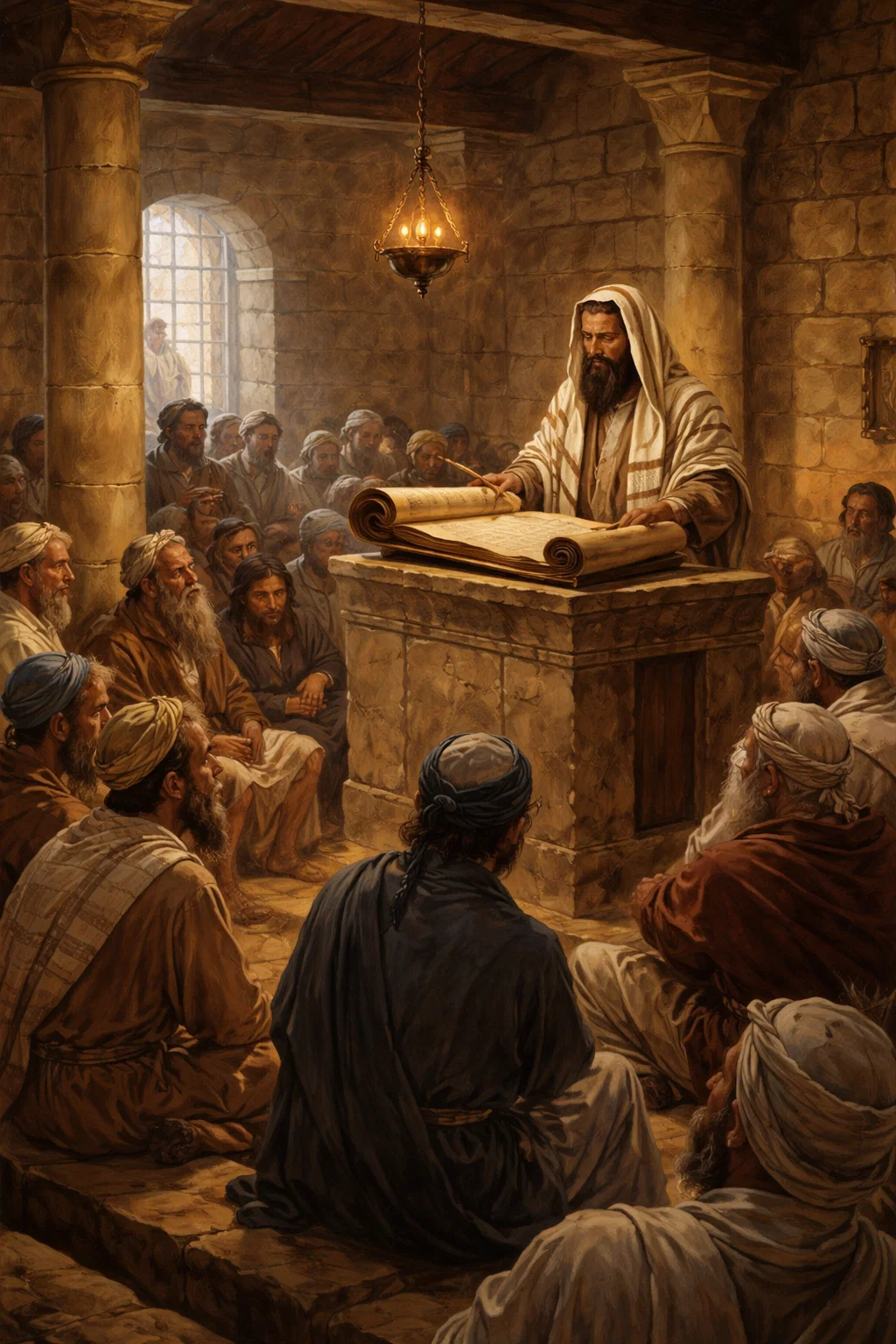
When Christians open the Bible, we are stepping into a story that did not begin with us. Long before the Scriptures were translated, printed, or preached from pulpits around the world, they were lived, prayed, and guarded by a particular people. The Bible is not merely a spiritual handbook or a collection of timeless truths; it is the record of God’s covenantal relationship with Israel, told through Israel’s history, language, worship, and hope.
This is not a marginal detail. It is foundational. To read the Bible well, we must first recognize whose story it is.
Paul states this plainly when he speaks about his own people: “They are Israelites, and to them belong the adoption, the glory, the covenants, the giving of the Torah, the worship, and the promises” (Romans 9:4). Scripture itself insists that the revelation of God came through Israel. The prophets were Israelites. The covenants were made with Israel. The Scriptures were written in Israel’s languages, shaped by Israel’s experiences, and preserved by Israel’s faithfulness.
What advantage, then, is there in being a jew...? Much in every way! First of all, the Jews have been entrusted with the very words of God ~ Romans 3:1-2
Even Jesus stands firmly within this story. He was born a Jew, lived as a Jew, worshiped as a Jew, and taught as a Jewish teacher speaking to fellow Jews. His disciples were Jews. The earliest believers were Jews. The New Testament does not float above Israel’s story; it is embedded within it.
This means that when we read the Bible without attending to Israel’s story, we risk misunderstanding not only the Old Testament, but the New Testament as well.
The Bible tells us this directly. Paul reminds Gentile believers that they were once “strangers to the covenants of promise,” but have now been brought near—not by replacing Israel, but by being joined to Israel’s story through the Messiah (Ephesians 2:12–13). Later, he uses the image of an olive tree, warning Gentile believers not to boast over the natural branches. “You do not support the root,” he writes. “The root supports you” (Romans 11:18).
That root is Israel.
Understanding this changes how we approach Scripture. Instead of asking, “What does this verse mean to me?” as our first question, we learn to ask, “What did this mean to them?” Only after listening carefully to the original audience can we begin to understand how the Scriptures speak to us today.
When Jesus speaks of the “kingdom of God,” He is drawing from Israel’s prophets. When He speaks of repentance, forgiveness, and restoration, He is echoing Israel’s Scriptures. When He celebrates Passover with His disciples, He is locating His own mission within Israel’s story of redemption. Even His resurrection is framed in the language of Israel’s hope for renewal and life beyond exile and death.
The early believers understood this instinctively. Luke tells us that after His resurrection, Jesus explained to His disciples “everything written about Him in the Torah of Moses and the Prophets and the Psalms” (Luke 24:44). In other words, He taught them how to read Israel’s Scriptures rightly—not as a discarded past, but as the foundation for understanding what God was doing in the present.
For modern readers, especially those from non-Jewish backgrounds, this calls for humility. We are inheritors, not originators. We are guests welcomed into a story that began long before us. This does not diminish our place in God’s plan; it deepens it. When we honor Israel’s role in the Scriptures, we gain a clearer picture of God’s faithfulness and a richer understanding of His purposes.
It also guards us from reading the Bible as though God has changed His mind or abandoned His promises. Scripture repeatedly affirms that God’s calling of Israel is not revoked. As Paul writes, “The gifts and the calling of God are irrevocable” (Romans 11:29). The God who spoke to Abraham, who revealed Himself at Sinai, and who sent the prophets is the same God who sent the Messiah. His story moves forward, but it does not erase what came before.
Reading the Bible through Israel’s story does not weaken Christian faith; it strengthens it. It anchors our reading in the reality of God’s covenantal faithfulness. It helps us hear Jesus more clearly. And it reminds us that Scripture is not an abstract text, but a lived testimony of God dwelling with a people He chose to reveal Himself to the world.
Only when we begin there—with the people of Israel—are we truly prepared to understand the Scriptures they were entrusted with.
Leave a Reply
You must be logged in to post a comment.