
Romans 9–11 is one of the most important sections of the New Testament and also one of the most misunderstood. Many readers approach these chapters assuming Paul is explaining why the Church replaced Israel or why God rejected the Jewish people. But if we follow Paul’s argument carefully, we see that he is answering a different question.
These chapters have also been among the most debated passages in Christian theology, with interpreters offering widely different explanations of election, Israel, and the relationship between Jews and Gentiles. This exegetical walkthrough seeks to accurately reflect a Post-Supersessionist reading of the text and place some highly debated verses in their context. All scripture listed is from the ESV translation.
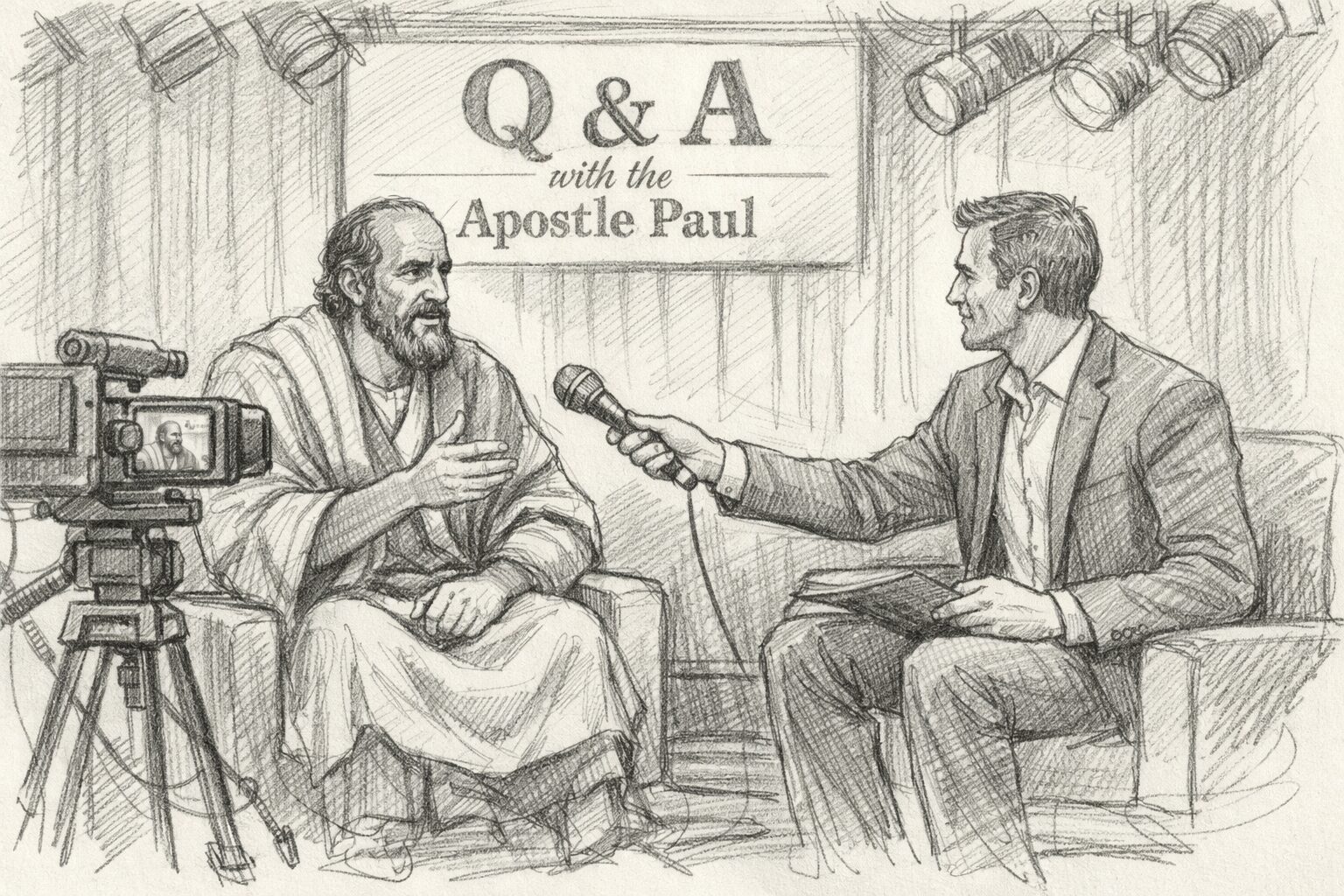
In this article we will walk through Paul’s argument in an exegetical Q&A format with a few pit stops along the way. Let’s start with the overall question that Paul is answering, and we will dive into the sub-questions that Paul is explicitly, or implicitly answering as we go.
Q: If Israel is God’s covenant people, why are many Jews not following Yeshua while Gentiles are responding to the gospel in large numbers?
Paul is addressing a situation in Rome likely included both Jewish and Gentile believers navigating real tensions within the community. After Jewish followers of Jesus returned to Rome following the expulsion under Claudius (Acts 18:2), Gentile believers may have assumed a dominant role in the church. Paul’s warning against Gentile arrogance suggests that these tensions were already present. For Paul this is not theoretical and he begins with his anguish over his own people:
“I have great sorrow and unceasing anguish in my heart.” (Romans 9:2)
He even says he would be willing to be cut off from Jesus the Messiah if it could bring Israel to salvation. His grief is intensified because Israel still possesses extraordinary covenant privileges:
“To them belong the adoption, the glory, the covenants, the giving of the Torah, the worship, and the promises.” (Romans 9:4)
Notice that Paul speaks in the present tense. These privileges and covenants still belong to Israel.
This leads to the central question of Romans 9–11.
Romans 9 — God’s Promise Has Not Failed
Q: If many Israelites are not believing, has God’s word to Israel failed?
“It is not as though the word of God has failed.” (Romans 9:6)
A: No. God has always worked through a faithful remnant within Israel.
This is the meaning of Paul’s statement:
“For not all who are descended from Israel belong to Israel.” (Romans 9:6)
This verse is often misunderstood. Paul is not saying that Gentile believers replace the Jewish people. Rather, he is wrestling with what it means to belong to Israel in light of God’s promises. Throughout Israel’s history there has been a distinction between physical descent and covenant faithfulness. For example, Abraham had multiple sons, but the covenant promise continued through Isaac rather than Ishmael (Gen. 21:12). Later, within Isaac’s own household, the covenant line continued through Jacob rather than Esau (Gen. 25:23). Even within the nation itself the prophets often spoke of a faithful remnant when much of Israel had turned away from God (Isa. 10:20–22; 1 Kings 19:18). Paul draws on this long biblical pattern to explain how God’s promises can remain true even when many within the nation are not responding in faith.
Paul illustrates this pattern with examples from Genesis. God chose Isaac rather than Ishmael and Jacob rather than Esau. These stories are not about individual salvation but about how God advances His covenant purposes through particular lines of promise.
This is Paul’s argument in another frequently misunderstood verse appears in Romans 9:13:
“Jacob I loved, but Esau I hated.”
Paul is quoting Malachi, where the statement refers to the nations of Israel and Edom. In biblical idiom “love” and “hate” often express preference or election for a purpose rather than emotional hostility.
These examples lead into one of the most debated sections of Romans. Paul’s discussion of Pharaoh, the potter and clay, and “vessels of wrath” raises difficult questions about divine sovereignty and human responsibility (Rom. 9:17–23). Paul does not fully resolve that tension. Instead, he emphasizes that God’s redemptive purposes are unfolding in ways that humans may not fully grasp. The focus of the passage is not about determinism, but Paul’s defense of God’s faithfulness to His covenant promises.
Q: If God chooses how His purposes unfold, is God unjust?
“Is there injustice with God?” (Romans 9:14)
A: Absolutely not.
Paul quotes God’s words to Moses after the golden calf incident:
“I will have mercy on whom I have mercy.” (Romans 9:15)
In the original context God spoke these words after Israel committed one of its greatest sins, yet He chose mercy rather than destruction. Paul’s point is clear: if God did not abandon Israel then, Israel’s current situation cannot mean that the covenant has failed either.
Q: Why are Gentiles obtaining righteousness while many in Israel are stumbling?
A: Because righteousness ultimately comes through faith, not merely through pursuing the law apart from faith.
“Behold, I am laying in Zion a stone of stumbling.” (Romans 9:33)
The stone itself is not the problem; the problem is how people respond to it.
Summary of Romans 9:
God’s promises have not failed. Throughout Israel’s history God has preserved a faithful remnant within the nation, and the present situation continues that pattern.
Romans 10 — Why Did Israel Miss the Messiah?
Q: If Israel has the Torah and the promises, why are many missing the Messiah?
Paul again expresses his desire:
“My heart’s desire and prayer to God for them is that they may be saved.” (Romans 10:1)
He acknowledges Israel’s devotion:
“They have a zeal for God, but not according to knowledge.” (Romans 10:2)
A: The problem is not zeal for God or commitment to Torah. The issue is recognizing where the Torah itself was pointing.
One of the most debated verses appears here:
“For Messiah is the end of the law for righteousness to everyone who believes.” (Romans 10:4)
The Greek word telos is often translated “end,” and in many contexts it does carry the sense of completion or conclusion. But the word can also refer to a goal, outcome, or intended purpose. In this passage, the idea of simple termination does not fit Paul’s argument. Throughout Romans he treats the Torah as God’s revelation and repeatedly appeals to it to explain the righteousness revealed in Messiah. Paul’s point is not that the Torah has been discarded, but that Messiah brings it to its intended fulfillment. In other words, Messiah is the destination toward which the Torah’s promises, instructions, and prophetic patterns have always been pointing.
Paul reinforces this by quoting Deuteronomy 30:
“The word is very near you, in your mouth and in your heart.” (Romans 10:8)
Just as Israel could not claim the Torah was inaccessible, they cannot claim the Messiah is inaccessible. God has already acted.
In its original context, Moses was reminding Israel that God’s instruction was not hidden in heaven or beyond the sea. They did not need to search for it or retrieve it from somewhere distant—God had already revealed it to them. Paul applies this same logic to the Messiah. Just as Israel could not claim that the Torah was inaccessible, they cannot claim that the Messiah is inaccessible either. God has already acted in history; the revelation they were waiting for has already come near.
Q: So what does responding to Messiah actually look like then?
A: Faith expressed through allegiance to the risen Messiah.
“If you confess with your mouth that Jesus is Lord and believe in your heart that God raised him from the dead, you will be saved.” (Romans 10:9)
Paul’s language here deliberately echoes Deuteronomy 30, which he quoted just a few verses earlier:
“The word is very near you, in your mouth and in your heart.” (Rom. 10:8; cf. Deut. 30:14)
The covenant response God desired involved both heart and mouth: inward trust and outward commitment. Paul applies this same covenant pattern to Messiah. Just as Israel was meant to internalize the Torah in their heart and speak it with their mouth, so now the proper response to Messiah involves believing in the heart and confessing with the mouth.
Q: Did Israel fail to believe because they never heard the message?
“Their voice has gone out to all the earth.” (Romans 10:18)
A: No. Israel has heard. The issue is recognition. Paul concludes with Isaiah’s words: “All day long I have held out my hands to a disobedient and contrary people.” (Romans 10:21)
This is not abandonment language but the language of persistent invitation.
Summary of Romans 10:
Israel’s unbelief reflects a tragic misrecognition of the Messiah in a prophetic season the prophets themselves anticipated. But the call of responding to the Messiah with inward trust and outward commitment incumbent on both Jew and Gentile, and it is through this that they might be saved.
Romans 11 — Has God Rejected His People?
Q: If Israel did not recognize the Messiah, then has God rejected His people?
“Has God rejected His people?” (Romans 11:1)
A:
“By no means!”
Paul first points to himself as evidence:
“I myself am an Israelite.” (Romans 11:1)
If God had rejected Israel, Paul’s own faith in Messiah would be impossible. Importantly, Paul identifies himself in the present tense as an Israelite, showing that faith in Messiah did not erase his Jewish identity. For Paul, believing in Messiah does not dissolve the distinction between Jew and Gentile; rather, Jewish believers like himself remain part of Israel, serving as living evidence that God has not rejected His people and that a faithful remnant still exists within the nation.
He then returns to the concept of the remnant:
“So too at the present time there is a remnant chosen by grace.” (Romans 11:5)
Q: Did Israel stumble so that they would fall permanently?
“Did they stumble so as to fall?” (Romans 11:11)
A: No. Instead:
“Through their trespass salvation has come to the Gentiles.”
Israel’s stumble is not a final collapse but a temporary step in God’s redemptive plan. The spread of the gospel among the Gentiles is not replacing Israel but creating a dynamic that ultimately leads back to Israel.
Paul explains the purpose:
Gentile inclusion is meant to provoke Israel to jealousy.
In other words, as the nations come to know the God of Israel through Messiah, their faithfulness may awaken Israel and draw them back to their own covenant promises. Paul himself expresses this hope cautiously, saying that he hopes “some” of his fellow Jews might be saved through this process (Rom. 11:14).
Paul illustrates this with the olive tree metaphor:
“Remember it is not you who support the root, but the root that supports you.” (Romans 11:18)
The root of the tree represents the covenant story of Israel—the promises given to the patriarchs and the people through whom God brought His revelation into the world. Gentile believers are graciously grafted into that story, but they do not replace it. In fact, Paul explicitly warns Gentile believers against arrogance:
“Do not become proud, but fear.” (Romans 11:20)
Throughout history the Church has often fallen into the very attitude Paul cautions against, assuming that Israel’s stumbling means Israel has been permanently replaced. Paul insists the opposite: Gentiles share in the nourishment of Israel’s covenant promises, but the root still belongs to Israel, and the branches that were broken off can be grafted in again.
Q: Then what is happening to Israel right now?
“A partial hardening has come upon Israel until the fullness of the Gentiles has come in.” (Romans 11:25)
A: Israel is experiencing a partial and temporary hardening, not a permanent rejection. Paul then gives a remarkable promise:
“And in this way all Israel will be saved.” (Romans 11:26)
Interpreters have understood this phrase in several ways—some see it referring to the elect remnant across time, others to a redefined “Israel” including Gentiles. In this passage, however, Paul appears to be speaking about Israel as a people within God’s covenant story. His point is that Israel’s current resistance is not the end of the story.
Paul’s point is that Israel’s current resistance is part of a larger moment in God’s redemptive plan. The hardening is partial—because a remnant of Jewish believers already exists—and it lasts only until the fullness of the Gentiles comes in (Rom. 11:25). God’s covenant with Israel has not been revoked.
Paul anchors this hope in the promises of the prophets:
“The Deliverer will come from Zion; he will banish ungodliness from Jacob.” (Romans 11:26–27)
In other words, Israel’s story is not finished. The same God who called Abraham and made covenant promises to the patriarchs will ultimately bring restoration. Israel’s stumbling is temporary, but God’s covenant faithfulness is permanent.
Q: Are the Jewish people enemies of the gospel?
Paul holds two truths together:
“As regards the gospel they are enemies for your sake, but as regards election they are beloved for the sake of the fathers.” (Romans 11:28)
A: In terms of the gospel mission many in Israel currently resist the message and are “enemies” of the Gospel, yet in terms of God’s covenant they remain beloved.
“The gifts and calling of God are irrevocable.” (Romans 11:29)
Q: Why has God allowed both Jews and Gentiles to experience disobedience?
“God has consigned all to disobedience, that he may have mercy on all.” (Romans 11:32)
A: God allows human disobedience so that His mercy can reach everyone. Earlier in Romans Paul explained that both Jews and Gentiles stand under sin, and here he reveals the larger purpose: neither group can claim righteousness on its own. Instead, both ultimately stand in the same position—dependent on God’s mercy. What may appear to be failure or resistance in the story of Israel and the nations is actually part of a larger plan in which God humbles everyone so that His mercy can be extended to all.
The Big Picture of Romans 9–11
Romans 9 shows that God’s promises have not failed because He preserves a faithful remnant.
Romans 10 explains Israel’s present resistance to Messiah and the proper response to the messiah.
Romans 11 reveals that Israel’s stumbling serves a redemptive purpose that ultimately leads to restoration.
Seeing the brilliance of this plan, Paul ends not with explanation but with worship:
“Oh, the depth of the riches and wisdom and knowledge of God!” (Romans 11:33)
Paul began this section grieving over Israel and wrestling with one of the hardest questions in the early church. He ends not with triumph, but with worship.
“Oh, the depth of the riches and wisdom and knowledge of God!” (Romans 11:33)
If Paul responds to God’s plan with awe and humility, perhaps the real question for us is this:
Are we approaching God’s purposes with the same humility—or assuming we understand His plan better than He does?
And perhaps even more pointedly:
Are we heeding Paul’s warning not to become arrogant toward the Jewish people, especially our brothers and sisters in Christ that retain their jewish identity like Paul? Do we remember that we do not support the root, but the root supports us?
Romans 9–11 invites us not only to wrestle with God’s mysterious plan of redemption, but also to approach it with the humility Paul himself models.
Leave a Reply
You must be logged in to post a comment.